


When I started to spin a multiple payline slot like Chicken Road, I made almost every error you can imagine. I pressed spin without reviewing the paytable, believed all paylines operated the same, and had no clear idea how the bonus features kicked in. Multi-payline slot games are all over the place now, and they deliver a degree of thrill that old-school three-reel games simply cannot compete with. Yet that extra complexity trips up a lot of beginners. The great news is that every mistake I am about to detail is completely preventable once you know what to seek. This article is not about telling you how to come out ahead every time — no one can promise that — but about guiding you avoid the mistakes that deplete your balance more quickly than needed and transform a fun session into a frustrating one. I will go over seven particular novice mistakes, using Chicken Road as a concrete example where it helps to anchor the advice. By the end, you will have a useful list you can use to any multi-payline slot game you try, whether you are spinning on a computer at home or on your mobile during a journey.
Number one. Misjudging How Paylines Actually Work
Among the most common mistakes I encounter is regarding every multi payline slot as if it functioned as a simple left‑to‑right matching game. In reality, the way paylines evaluate wins can vary significantly from one title to another. Some games, including many modern releases, pay for matching symbols on adjacent reels starting from the leftmost reel, while others allow wins from both left to right and right to left. A few even count combinations that land anywhere on consecutive reels. When I first tried Chicken Road, I quickly realised that assuming a standard left‑to‑right pattern without checking the rules could lead me to misinterpret a near‑miss as a complete loss. The game’s help screen spells out exactly how its paylines are evaluated, and I now make a habit of reading that before I place a single bet. Skipping this step means you might celebrate a win that never actually happened, or worse, overlook a genuine payout because the symbols did not line up in the way you expected.
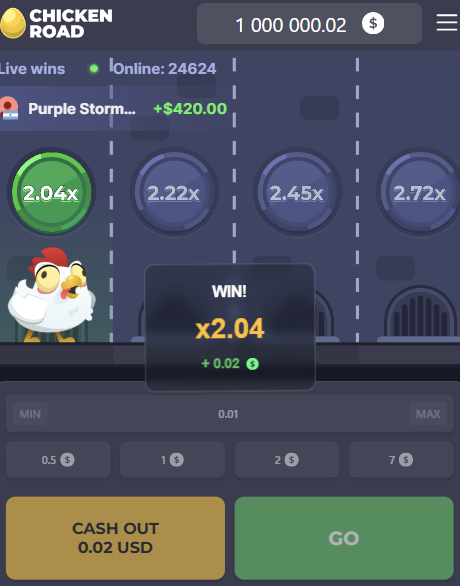
Another layer of confusion comes from the difference between fixed and adjustable paylines. In older slots you could often choose how many lines to activate, but many contemporary multi payline games lock all paylines in place. Chicken Road, for instance, keeps every payline active on every spin, which means your total bet is spread across all of them. Beginners sometimes believe they are betting only the coin value they select, overlooking that the number of paylines increases that stake. I have watched players accidentally wager far more per spin than they intended because they missed this detail. Understanding the maths behind your total bet — coin size multiplied by active paylines — is not optional; it is the basis of sensible bankroll management. If you are unsure, the game’s interface will always display the total bet amount clearly, and I advise double‑checking it before you hit spin.

The Contrast Between Fixed and Adjustable Paylines
Determined paylines mean you cannot reduce the number of lines in play. This design choice makes easier the betting interface but requires that you pay close attention to the minimum and maximum stakes. In Chicken Road, all paylines are permanently active, which guarantees you never miss a winning combination because a line was switched off. The trade‑off is that your base bet will be higher than in a game where you could activate only a handful of lines. I have met players who prefer adjustable payline slots because they feel more in control of their risk per spin, but I find fixed payline games easier to manage once I accept the total bet amount. The key is to adjust your coin value, not the number of lines, to stay within your comfort zone.
Paths to Victory vs. Traditional Paylines
A number of multi payline slots discard the classic line concept altogether and utilize a “ways to win” mechanic, where matching symbols on adjacent reels pay regardless of their exact position. Chicken Road adheres to a traditional payline structure, but it is worth knowing the difference because the two systems can feel very different during play. With ways to win, every possible left‑to‑right combination is essentially a payline, which often leads to more frequent small hits. Traditional paylines, by contrast, require symbols to land on specific predefined lines. I have seen beginners get frustrated with a ways‑to‑win game because they expected a payline‑style pattern, and vice versa. Always confirm which system the slot uses before you start; the information is usually displayed prominently in the paytable or rules section.
Betting Lacking a Bankroll Strategy
Among the quickest ways to ruin a session on a multi payline slot is to start spinning with no clear plan for your money. The first time I played Chicken Road, I simply picked a bet size I was comfortable with and adjusted it on a whim based on wins and losses. That erratic approach led to me burning through my deposit a lot faster than I expected. A proper bankroll strategy does not need to be complicated. I now set a total loss limit for the session, divide it by my chosen bet size, and calculate approximately how many spins I can afford. For example, if I have €50 and want to bet €0.50 per spin, I know I have 100 spins before my funds run out. That basic calculation gives me a real sense of the session’s potential length and helps me resist the temptation to chase losses with bigger bets.
Bet sizing in a multi-line slot like Chicken Road also affects the game’s features. Some bonus rounds and jackpots are only triggered when you bet above a certain limit, or their occurrence scales with your stake. I always examine the paytable to see if there is any mention of bet‑dependent features. If the game has a progressive jackpot, for illustration, it might demand a maximum bet to be eligible. Ignoring that detail could mean you trigger a bonus but miss out on the top prize. I also sidestep the common trap of clicking the “max bet” button without knowing the total cost. That button can instantly raise your stake to a level that eats a huge chunk of your bankroll in just a few spins, so I activate it only when I have deliberately budgeted for high‑risk play.
The Danger of Minimum Bet Only
Sticking exclusively to the smallest possible bet might seem like the safest choice, but it can backfire in specific situations. Some multi payline slots reduce the effective RTP or disable certain bonus features when you play below a particular stake. I have not seen this in Chicken Road, but it is a practice worth looking out for across the wider market. Additionally, betting the minimum means your wins will also be at their smallest, which can make the game feel unrewarding even when you hit a bonus round. I prefer to find a middle ground — a bet size that lets me play for a reasonable duration while still giving me a chance at payouts that feel meaningful relative to my bankroll.
Overbetting and Depleting Funds Quickly
The opposite mistake is betting too high too soon. I have watched players double their stake after a few losses, convinced that a it.wikipedia.org big win is “due.” Multi payline slots do not work on a cycle that you can predict, and increasing your bet in frustration only accelerates your losses. I set a hard rule for myself: I never raise my bet size by more than 50% during a session, and I only do so after a significant win, never after a losing streak. This discipline keeps my bankroll intact and my emotions in check. When I play Chicken Road, I treat each spin as an independent event, and I remind myself that the random number generator has no memory of what happened before.
- Determine a total session loss limit prior to starting the game.
- Divide your bankroll by your base bet to calculate the number of spins.
- Never increasing your bet after a loss; only think about raising it after a win.
- Confirm if any bonus features require a minimum bet to be fully active.
2. Omitting the RTP and Volatility Examination
I once overlook the theoretical return to player (RTP) percentage and volatility rating entirely, viewing them as abstract numbers that did not influence my session. That was a error. RTP indicates how much of the total wagered money a slot is programmed to pay back over millions of spins, and while it cannot forecast short‑term results, it gives you a baseline for comparison. A game with 96% RTP will, in theory, retain less of your money over time than one with 94% RTP. When I play Chicken Road, I verify its RTP in the game information panel. If the exact figure is not directly displayed, I look for it on the provider’s official site or a trusted review. Understanding that number helps me establish realistic expectations; I do not begin expecting a 90% return session to magically turn into a profit.
Fluctuation, casionally referred to as variance, is just as important and commonly overlooked by beginners. Low‑variance slots dispense small wins often, which may keep your balance steady for a long time. High‑variance games, however, provide greater wins but accompanied by lengthier dry spells between them. Chicken Road’s volatility lies in a range that I would describe as mid to high, meaning you could go through multiple spins lacking a notable hit prior to a bonus round or a big symbol combination appears. If you aren’t prepared for that pace, it becomes easy to overreact and increase your bet size at the wrong moment, or to quit immediately prior to the game’s natural payout cycle begins. I invariably match the volatility to my session goal: if I desire a calm, lengthier playtime, I lean toward lesser variance; if I am chasing a larger payout and am able to handle swings, mid or substantial volatility works for me more.
The reason a High RTP Doesn’t Promise Immediate Wins
RTP is a long-term statistical norm, not a promise for your next hundred spins. I have witnessed players assume that a 97% RTP slot will pay back €97 for every €100 they wager in a single night, and then get cheated when they drop more. The calculations does not function that way. Volatility means that in the short term, results can deviate wildly from the expected average. One round might return 40% of your bet, while another could payout 150%. Chicken Road, like any slot game, runs on a random number generator, so each spin is independent. I remind myself that RTP is a useful criterion for picking a game, but it never guarantees a specific result during the time or two I aim to play.
Tailoring Risk to Your Playing Method
Your temperament and budget should dictate the volatility you seek. If you become stressed after ten dead spins, a volatile game will test your nerves. I found this out the hard way by jumping into a highly volatile slot with a small bankroll and seeing it evaporate before a bonus ever hit. Now, before I try Chicken Road, I consider how much I am ready to lose and how long I expect the session to last. For a medium‑volatility game, I budget for a session that can absorb at least 80 to 100 spins without a major hit. That strategy keeps me calm and stops impulsive decisions. If you are uncertain about a game’s volatility, many online casino sites show a rating, or you can assess it by testing the demo version and noticing how often the bonus features appear.
6. Recovering Losses and Gambling With No Limits
Reactive decisions at the slot reels are the fastest way to turn a small loss into a big one. I have been there myself: after a series of dead spins on Chicken Road, I had a strong urge to double my bet and “win back” what I had lost. That drive is common but dangerous. Multi payline slots operate on random outcomes, and no amount of increased wagering can force a win. When I pursue losses, I often to abandon my bankroll plan and make reckless bets that I would never consider with a clear head. The cure is to establish both a loss limit and a win limit before I start playing. For example, I might decide that if I lose €30 or double my starting balance, I will conclude the session regardless of how I feel. Jotting those numbers down or establishing a deposit limit on the casino platform makes them more difficult to ignore in the heat of the moment.
Session durations are just as important. Multi-line slot games can be captivating, and it is simple to lose sight of how long you have been reeling. I put a timer on my phone for between 45 minutes and an hour. When it alerts, I take a break, stand up, and assess whether I desire to continue. This routine stops the fatigue that results in sloppy decisions, like accidentally hitting the max bet button or misreading a near‑win as a win. I also steer clear of playing when I am exhausted, anxious, or intoxicated, because those states compromise my judgment. The aim is to preserve the game fun and within my management, not to let the game control me. Chicken Road’s design is amusing, but no slot is worthy of financial stress.
Establishing Stop-Loss and Take-Profit Limits Before You Start
I consider loss and win limits as non‑negotiable rules. A loss limit is the highest sum I am prepared to forgo in one session. A win limit is the level at which I cash out and savor the profit, rather than giving it back to the casino. For Chicken Road, I generally establish a win limit of 50% higher than my starting balance. If I reach it, I take out the original deposit plus some profit and may proceed with a smaller portion. This approach guarantees gains and avoids the all‑too‑common scenario of a big win disappearing over the next twenty spins. I suggest writing these limits on a sticky note next to your screen or using the responsible gambling tools that many platforms provide.
The Psychological Pitfall of “One More Try”
The phrase “just one more spin” acts as a danger sign. It often suggests that I am trying to make up for a loss or continue a hot streak past logic. When I catch myself thinking it, I force myself to halt and check my limits. In Chicken Road, the fast pace of the reels can make it feel like the next spin will be the one, but from a statistical standpoint, each spin stands alone. I have learned to spot the feeling of annoyance or thrill that clouds my judgment and to walk away when it appears. Pausing for five minutes often brings back my clarity and prevents me from taking a gamble I will later regret.
- Set a stop-loss and a win limit ahead of your first spin.
- Use a timer for your session and pause when it goes off.
- If you experience the impulse to chase losses, exit the game and move away for no less than ten minutes.
- Use platform tools like deposit limits to uphold your limits.
Number 5 Overlooking the Pay Table and Rules of the Game
I can’t count the number of occasions I have observed a novice user jump straight into a multi payline slot without even accessing the paytable. The paytable is not simply a dry list of picture values; it serves as the user guide for the entire game. It shows how pay-lines are arranged, what individual symbol gives for 3, four, or five, which symbols are wild or special, and how the bonus features operate. In Chicken Road game, the pay table also details the stake multiplier on particular jackpot prizes or bonus games. Bypassing it implies you are basically spinning in the dark. I currently make it a non‑negotiable first step to tap the “i” or “paytable” button and go through every screen. It requires two mins and entirely alters how I read what occurs on the reels.
Beyond symbol values, the game rules section often contains crucial details about maximum win caps, bet limits for progressive jackpots, and any special mechanics like cascading reels or expanding symbols. I once played a slot for an hour before noticing that the top jackpot was only available when I bet at a specific level, and I had been spinning below that threshold the entire time. That experience taught me to never assume anything. Chicken Road’s rules are clearly written, and I advise reading them with the same attention you would give to a contract. If a term is unclear, most reputable game providers include a detailed help section that explains every feature in plain language. Taking the time to understand the rules upfront prevents costly misunderstandings later.
The Prize Chart as Your Roadmap
Consider the paytable as a map that shows you where the value lies. It ranks symbols from highest to lowest paying, so you know immediately which combinations to root for. In Chicken Road, the highest‑value symbol can pay a substantial multiple of your line bet when you land five on a payline. Knowing that helps me gauge whether a spin was a near‑miss or just an average result. The paytable also displays the payout for scatter wins and any bonus round awards. I often take a screenshot of the paytable on my phone so I can refer to it without leaving the game screen. That small habit keeps me oriented, especially during fast‑paced auto‑play sessions.
Symbol Values and Winning Combinations
All symbols in a multi payline slot has a particular coin worth linked to it, and these amounts increase with your stake. Beginners sometimes assume that all symbols are of equal value, which leads to frustration when a full line of low‑value icons awards less than expected. maggiori informazioni employs a mix of high‑value themed icons and lower‑value card suit symbols, a typical arrangement. I focus to the gap between the highest and bottom symbols because it indicates how much of the game’s return is concentrated in those rare high‑value combos. If the highest icon gives 500 coins for five and the bottom gives only 50, I realize that most of the excitement will stem from getting the top symbols or starting the special feature.
4. Confusing Bonus Features and Their Triggers
Bonus features are the heart of any modern multi payline slot, yet I frequently see beginners view them as random surprises that occur spontaneously. In reality, every bonus round, free spin sequence, or multiplier features specific trigger conditions. Chicken Road, for example, employs scatter symbols to unlock its main bonus feature, and those scatters are required to land in a certain number and sometimes on particular reels. If you do not know the trigger rules, you may fail to identify a near‑trigger and adjust your expectations, or you could keep spinning without recognizing that a small bet change could affect the bonus’s potential. I always consult the paytable and study the bonus description carefully. It informs me exactly how many scatters I need, whether they appear on all reels or only some, and what happens during the feature itself.
Another layer of confusion stems from the different roles of wilds, scatters, and multiplier symbols. Wilds replace other symbols to create winning combinations, but they hardly ever substitute for scatters. Scatters frequently pay irrespective of payline position and are the key to free spins. Multipliers can appear in the base game or solely inside bonus rounds, increasing your win by a set factor. In Chicken Road, I realized that particular multiplier values only activate when a wild is part of the winning combination. Neglecting that detail could lead you to undervalue or overestimate a win. I always watch a few demo spins and deliberately note what each special symbol does before I risk real money. That small investment of time pays dividends by avoiding confusion when the reels get busy.
Bonus Spins and How They Activate
Bonus spin rounds are typically the most profitable part of a multiple payline slot, but they are not triggered at random. You generally need 3+ scatter symbols anywhere on the reels, though some games stipulate that they hit consecutive reels from the left. Chicken Road follows a like scatter‑based trigger, and the number of free spins awarded can grow if you hit extra scatters. I have witnessed players leave a game immediately before a free spin round because they were unaware they were a single scatter away. Knowing the trigger conditions assists you keep patient during barren periods. Moreover, free spins sometimes come with enhanced features like sticky wilds or growing multipliers, and the pay table will explain these comprehensively.
Wilds, Scatter icons, and Multiplier symbols – How They Actually Work
Wilds act as a substitute, but they typically carry no payout of their own except if the paytable specifies otherwise. Scatter symbols are special because they award from any position and are the gateway to bonus rounds. Multiplier icons can be applied to a single payline win or to the total spin win, based on the game. I once misinterpreted a multiplier symbol in a different slot and assumed it would multiply my entire balance, only to discover it affected just one line. In Chicken Road, the multiplier mechanics are explicitly laid out in the info screen, and I recommend checking them before you play. Knowing these symbols transforms a confusing reel grid into a readable story, and you will react faster when a big combination lands.
The Unique Role of Scatter Symbols in Chicken Road
In Chicken Road, the scatter symbol does more than just unlocking free spins. It also gives an instant scatter pay when two or more land, no matter their position on the reels. This implies that even if you do not activate the main bonus, a pair of scatters can still increase your balance. I consider this detail especially helpful because it lessens the frustration of near‑misses. The game’s paytable shows the exact scatter payout for two, three, four, or five symbols, and those amounts are multiplied by your total bet. Understanding this, I devote extra attention whenever a scatter lands, because a second one can provide a small but nice win that maintains the session moving.
- Be sure to review the special feature explanation in the paytable before you start.
- Scatters typically pay from any position and activate free games.
- Wild symbols replace standard symbols but rarely for scatter symbols.
- Multiplier symbols might apply solely to the line they land on or to the entire payout — read the rules.
7th Avoiding Practice Mode First
One of the most useful features accessible to any slot player represents the practice mode, yet beginners often ignore it completely. Practice mode allows you to spin the reels with play money, experiencing every function, payline, and bonus feature without betting a cent of your own money. When I want to test a slot like Chicken Road for the initial time, I always open the demo version and spin for at least 50 to 100 spins. This provides me with a practical understanding for how often the bonus feature hits, how the base game pays, and how https://www.fanpage.it/spettacolo/programmi-tv/patrizio-26-rossi-da-pacchista-finisce-con-un-solo-euro-ad-affari-tuoi/ the variance aligns with my expectations. Additionally, it enables me to test different stake levels and observe how they impact the bonus game winnings, all free from monetary risk. Bypassing this phase results in you are learning the game’s workings with genuine funds on the line, which constitutes an costly way to study.
Demo play also reveals the game’s pace in a way that a static paytable does not. I can see how frequently the scatter symbols appear, whether the free spin round tends to retrigger, and how big the typical base game wins are. In Chicken Road, I found that the bonus round could be quite hard to get during a short session, which showed me to plan for longer play if I hoped for a realistic chance of hitting it. That insight alone saved me disappointment when I moved to real‑money mode. Many online casinos provide demo versions of their slots without requiring a deposit or even an account, so there is no obstacle to testing before you play for real. I consider demo play an essential part of my strategy, just like studying the paytable.
How Demo Mode Shows Bonus Frequency
Bonus rounds are the main attraction of most multi payline slots, but their frequency can differ dramatically. In demo mode, I record how many spins pass between bonus triggers over a group of a few hundred spins. While this is not a mathematically perfect approach, it gives me a general idea of what to anticipate. For Chicken Road, I noted that the free spin feature appeared roughly once every 120 to 150 spins during my test sessions. That told me I had to have enough bankroll to withstand the gaps. If a game’s bonus frequency feels too low for my patience level, I know to seek out a different slot. This kind of testing costs nothing and can stop a lot of disappointment.
Experimenting With Bet Strategies Without Risk
I too use demo mode to try out bet sizing strategies. I could start with a flat bet for 50 spins, then try a progression where I increase my stake slightly after a win. Because the credits are virtual, I can see how these strategies impact my balance over time without any real consequences. When I later play Chicken Road with real money, I already have a sense for which bet size keeps me comfortable and how the game responds to different staking patterns. Demo mode is the closest thing to a risk‑free rehearsal, and I never skip it when trying a new multi payline slot. It turns an intimidating first session into a confident, informed one.